The Best Red Dot for Hellcat Micro-Compact is not just about size—it’s about finding the right balance between footprint compatibility, durability, and fast target acquisition on a very small carry gun.
The Springfield Hellcat presents a unique challenge. Its slim slide, RMSc footprint, and short sight radius mean your optic must be compact, rugged, and efficient under recoil. I’ve run micro dots on subcompacts long enough to know that not every “small optic” actually works well here. Some sit too high, some lose zero under recoil impulse, and others suffer from poor emitter sealing or weak glass.
In this guide, I break down six of the most proven optics for the Hellcat platform—focusing on real-world carry performance, not just spec sheets.
Top Product List: Best Red Dot for Hellcat Micro-Compact
HOLOSUN 407K
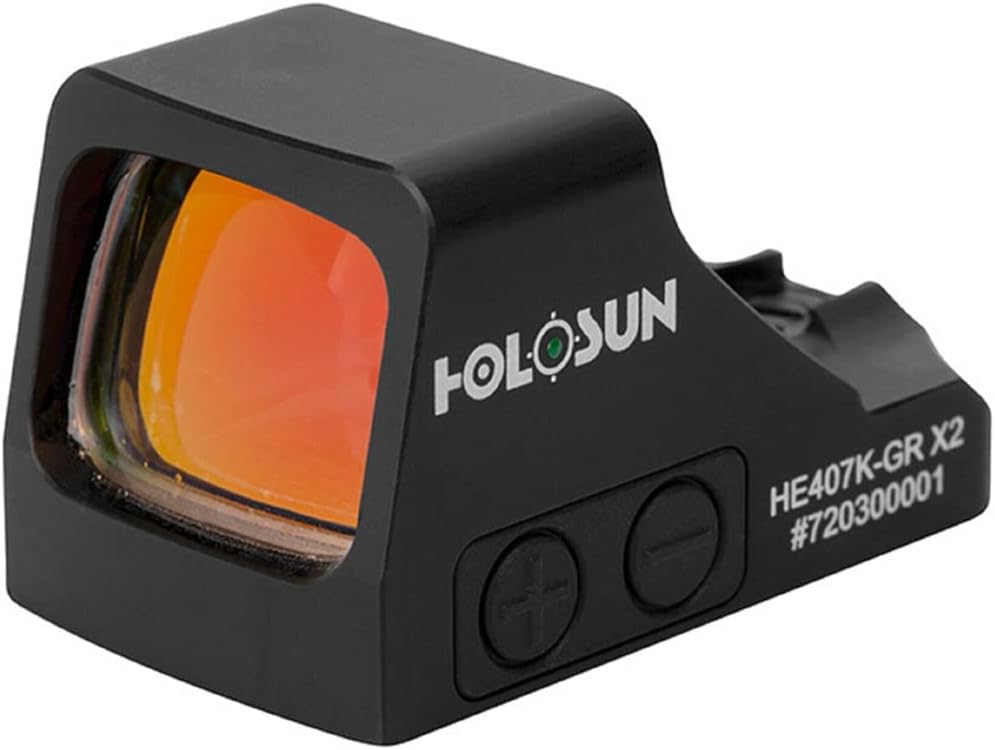
A minimalist micro red dot with a clean 6 MOA dot, designed specifically for slim carry pistols.
Specs:
- 6 MOA dot
- RMSc footprint
- Side battery tray (CR1632)
- 50,000-hour battery life
- Aluminum housing
Pros:
- Simple, uncluttered reticle
- Excellent battery access
- Strong durability for its class
Cons:
- No multi-reticle system
- Slight blue lens tint
My hands-on notes: The 407K is one of the easiest optics to shoot fast. The 6 MOA dot is forgiving under stress, especially on a short sight radius like the Hellcat. Parallax shift is minimal at defensive distances, and I found it stays consistent even when shooting off-axis. Deck height is low enough for a usable co-witness with factory-height irons.
What people say online: Users consistently praise its reliability and battery life. The consensus is that it punches above its price point.
Mounting clarity: Direct RMSc footprint fit for Hellcat OSP. No plate required, though minor lug modification may be needed on some slides.
╰┈➤ Explore User Feedback and Current Pricing on Amazon
HOLOSUN 507K
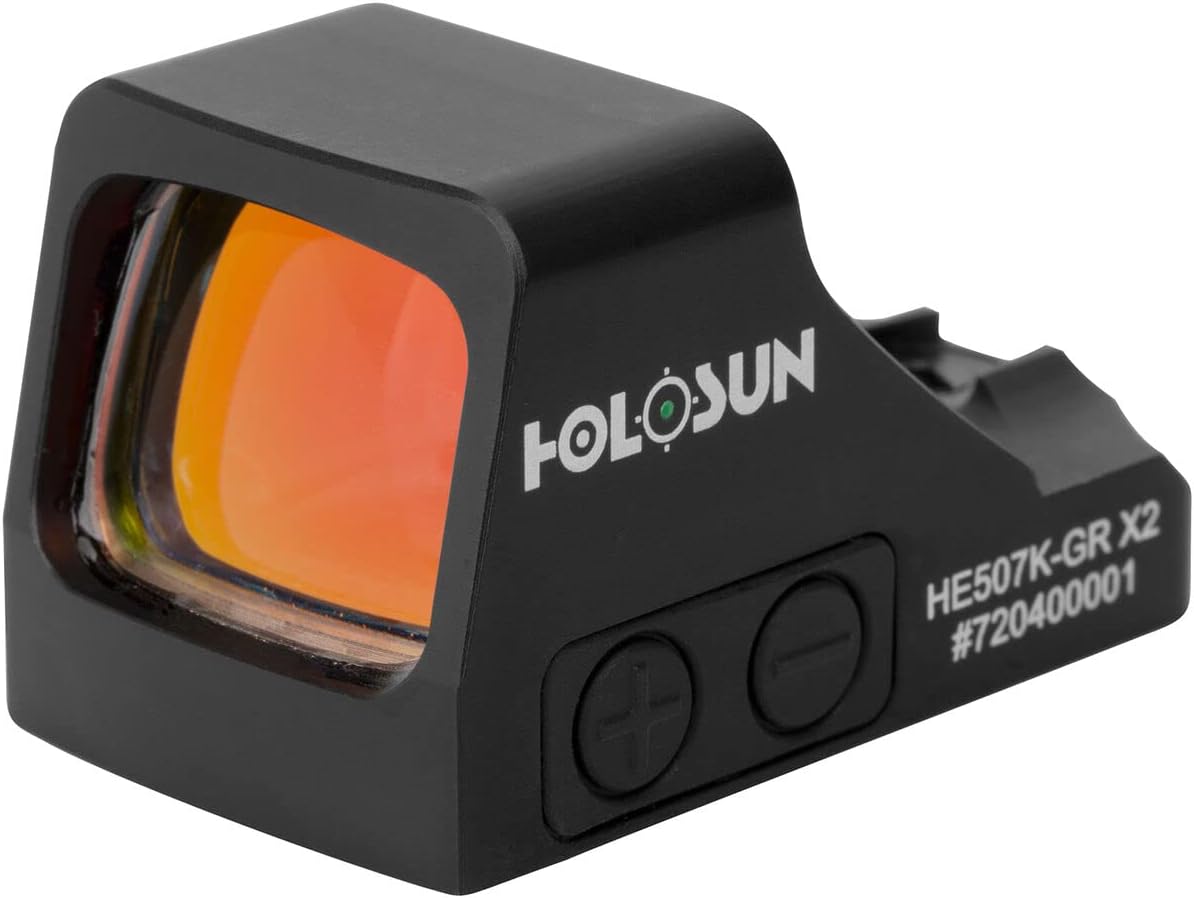
A feature-rich upgrade with Holosun’s multi-reticle system.
Specs:
- 2 MOA dot + 32 MOA circle
- RMSc footprint
- Side battery tray
- Shake Awake technology
- 7075 aluminum housing
Pros:
- Flexible reticle options
- Crisp emitter projection
- Durable housing
Cons:
- Slightly busier sight picture
- More expensive than 407K
My hands-on notes: The circle-dot system is extremely fast for close-range acquisition. I prefer running just the dot for precision, but the circle helps new shooters pick up the sight faster. Parallax is well-controlled, and the window distortion is minimal. Co-witness sits just right—lower 1/3 with standard Hellcat irons.
What people say online: Shooters love the versatility. Many consider it the “sweet spot” optic for micro-compacts.
Mounting clarity: Direct mount to RMSc footprint. Same considerations as 407K regarding recoil lugs.
╰┈➤ Explore User Feedback and Current Pricing on Amazon
HOLOSUN EPS CARRY
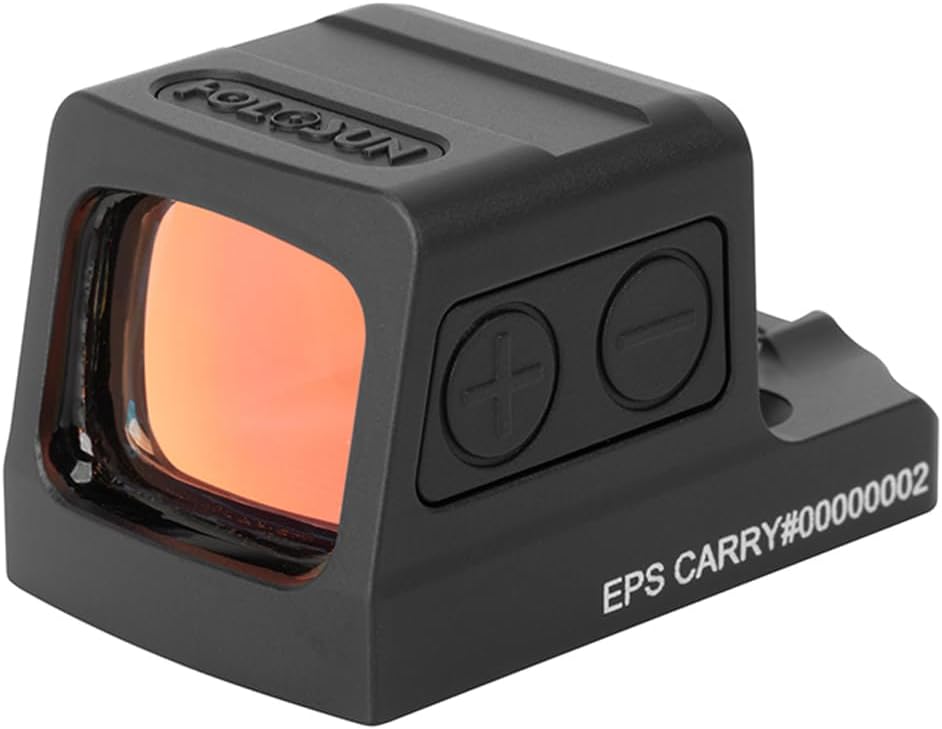
A fully enclosed emitter optic built specifically for concealed carry.
Specs:
- 2 MOA dot or MRS
- Enclosed emitter design
- RMSc-compatible footprint (with plate)
- Solar backup
- IPX8 waterproof rating
Pros:
- No emitter occlusion from lint or rain
- Clear, distortion-free glass
- Extremely durable
Cons:
- Requires mounting plate
- Slightly bulkier than open emitters
My hands-on notes: This is where enclosed optics shine. No lint blocking the emitter—a real issue with carry guns. The glass is cleaner than most open emitters, with less tint. Parallax is negligible, and tracking the dot under recoil is excellent. Co-witness is slightly higher due to the plate.
What people say online: Highly praised for reliability in real-world carry conditions, especially in humid or dusty environments.
Mounting clarity: Requires adapter plate for Hellcat OSP. Still compact enough for concealment.
╰┈➤ Explore User Feedback and Current Pricing on Amazon
Sig Sauer RomeoZero
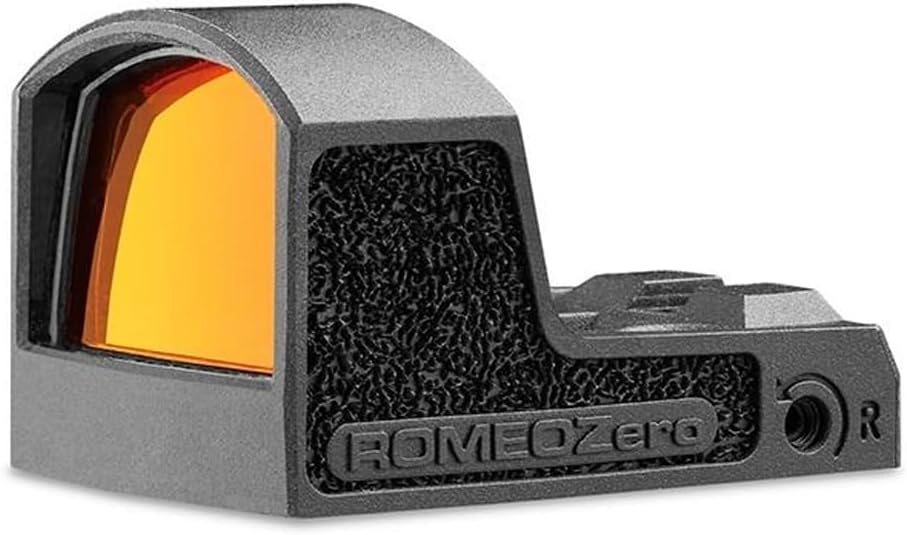
An ultra-lightweight polymer optic designed for micro pistols.
Specs:
- 3 MOA dot
- RMSc footprint
- Polymer housing
- Top-load battery
- Motion-activated illumination
Pros:
- Extremely lightweight
- Affordable
- Easy battery access
Cons:
- Polymer body less durable
- Scratch-prone lens
My hands-on notes: This optic prioritizes weight savings over durability. It works fine for light carry use, but I noticed more lens distortion compared to aluminum optics. Parallax is acceptable but not class-leading. Co-witness is excellent due to its low deck height.
What people say online: Mixed feedback—great value, but durability concerns are common.
Mounting clarity: Direct RMSc fit. No plate needed.
╰┈➤ Explore User Feedback and Current Pricing on Amazon
Trijicon RMRcc
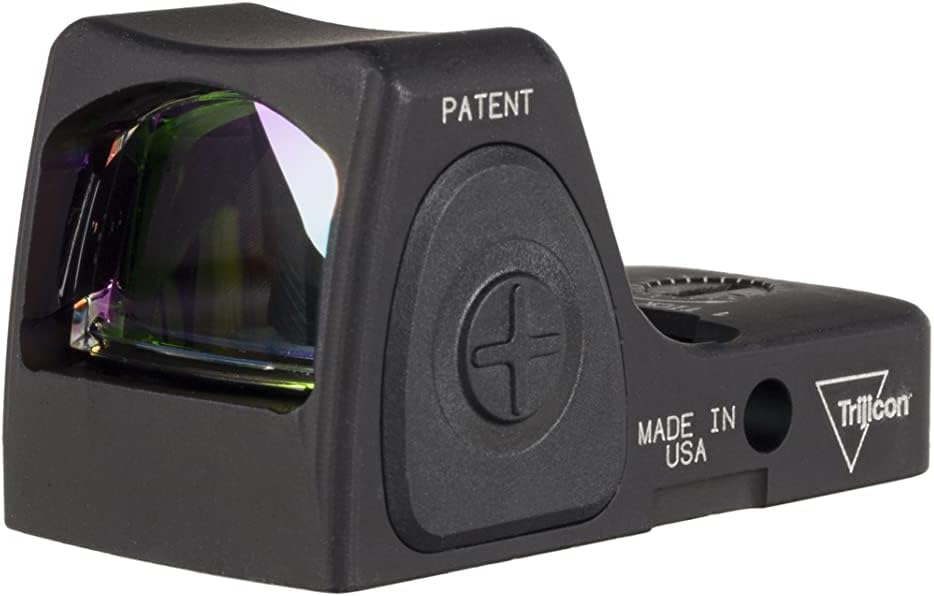
A premium micro red dot built with Trijicon’s legendary durability.
Specs:
- 3.25 MOA dot
- Proprietary footprint
- Top-loading battery
- Forged aluminum housing
- Waterproof to 20 meters
Pros:
- Exceptional durability
- Clear glass with minimal tint
- Proven brand reliability
Cons:
- Requires adapter plate
- Expensive
My hands-on notes: This optic feels bombproof. Recoil impulse from the Hellcat doesn’t phase it. The dot is crisp, and the glass is among the best in this class. Parallax is very well controlled. Co-witness is slightly higher due to mounting plate requirements.
What people say online: Widely trusted for duty use, though many note the mounting limitations.
Mounting clarity: Requires adapter plate for Hellcat. Not direct RMSc.
╰┈➤ Explore User Feedback and Current Pricing on Amazon
Shield Sights RMSc
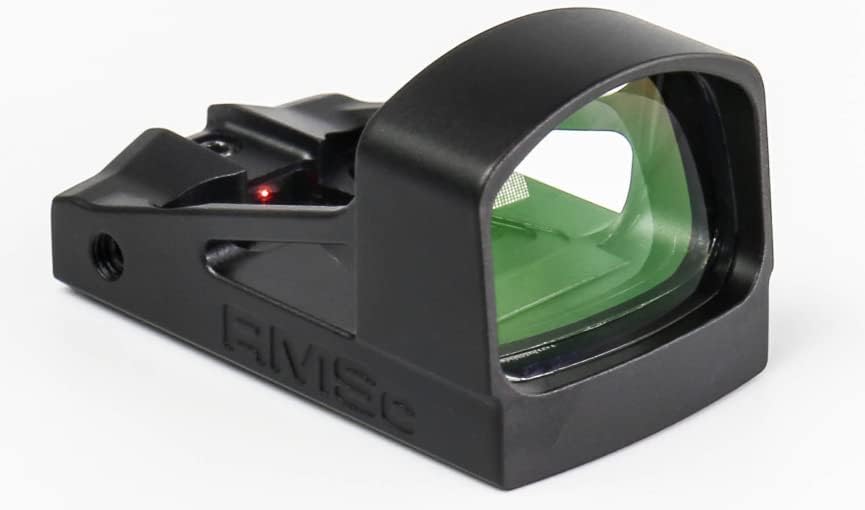
The original RMSc footprint optic that set the standard for micro pistols.
Specs:
- 4 MOA dot
- RMSc footprint
- Polymer lens
- Automatic brightness
- Ultra-low profile
Pros:
- Lowest deck height
- True direct fit
- Lightweight design
Cons:
- No manual brightness control
- Polymer lens durability concerns
My hands-on notes: This optic sits incredibly low, giving one of the best co-witness setups available. The automatic brightness works surprisingly well, though not perfect in extreme lighting transitions. Parallax is acceptable but slightly more noticeable than newer optics.
What people say online: Respected as the original, but many now prefer newer designs with better durability.
Mounting clarity: True direct mount to Hellcat OSP—no modifications needed.
╰┈➤ Explore User Feedback and Current Pricing on Amazon
How I Tested / Evaluation Criteria
Parallax: I tested each optic at 5–25 yards, focusing on off-axis dot movement. The best optics showed minimal shift even when the dot was near the edge of the window. This matters more on micro guns because sight alignment is less forgiving.
Co-witness / deck height: Lower deck height allows better integration with factory irons. I evaluated how each optic aligns with standard Hellcat sights and whether suppressor-height sights are necessary.
Durability: I looked at housing material, sealing, and how each optic handled recoil impulse. Micro pistols are harsher on optics than full-size guns due to faster slide velocity.
Battery: Battery type, access, and longevity matter. Side-loading trays scored highest for convenience, especially for maintaining zero.
Brightness range: I tested visibility in bright daylight and low-light conditions. Good optics offer usable brightness without blooming or starbursting.
Glass quality: Clarity, tint, and distortion were key factors. A clean window improves target identification and reduces eye strain.
Controls ergonomics: Buttons must be usable with gloves and under stress. Poor tactile feedback is a real issue on some compact optics.
Mounting ecosystem: Direct mounting is ideal. Plate systems add complexity, height, and potential failure points.
How to Choose the Right Red Dot for This Gun
Choosing the right optic for a micro-compact like the Hellcat requires prioritizing different factors than you would for a duty pistol or rifle.
First, footprint compatibility is critical. The Hellcat uses an RMSc footprint, which means optics like the 407K, 507K, and RMSc itself fit best. Avoid optics that require plates unless you specifically want enclosed emitters or premium durability.
Second, consider deck height. A lower optic allows for better co-witness and faster indexing during the draw. This is especially important for concealed carry, where you may rely on iron sights if the dot fails.
Third, think about emitter design. Open emitters are lighter and more compact, but they can be obstructed by lint, rain, or debris. Enclosed emitters like the EPS Carry eliminate this issue but add bulk.
Fourth, durability matters more than you think. Micro pistols generate sharp recoil impulses, and weaker optics can lose zero over time. Aluminum housings are generally more reliable than polymer.
Fifth, battery access is not just convenience—it’s about maintaining zero. Side-loading batteries are ideal because they allow replacement without removing the optic.
Finally, reticle choice affects shooting speed. Larger dots (5–6 MOA) are faster to acquire, while smaller dots (2–3 MOA) offer better precision. For defensive use, I generally prefer larger dots.
FAQs
1. Do I need a plate for Hellcat optics? Not for RMSc footprint optics like 407K or RMSc. Others may require adapter plates.
2. Is an enclosed emitter worth it? Yes, especially for carry. It prevents emitter occlusion from lint and moisture.
3. What MOA dot is best for concealed carry? A 5–6 MOA dot is faster for defensive shooting, while 2–3 MOA offers more precision.
4. Can I co-witness with factory sights? Yes, with most low-profile optics. Some setups may require suppressor-height sights.
5. How often should I change the battery? Annually is a good rule, even if the optic advertises longer life.
Conclusion
Finding the Best Red Dot for Hellcat Micro-Compact comes down to balancing size, durability, and usability under stress. For most shooters, the Holosun 407K or 507K offers the best mix of performance and value, while the EPS Carry stands out for its enclosed design.
If you prioritize ruggedness above all, the RMRcc is hard to beat. If you want the lowest profile possible, the RMSc still holds its ground.
Choose based on how you carry, how you train, and what trade-offs you’re willing to accept—because on a micro-compact, every detail matters.