The Best Red Dot for Heavy Recoil must be more than just a precision aiming tool; it must be a structural tank capable of surviving violent G-forces without losing zero or shattering its internals. Whether you are mounting an optic on a 12-gauge slug gun, a .450 Bushmaster, or a slide-ride 10mm pistol, the snap of the recoil impulse is the ultimate "filter" for cheap glass. In this guide, I evaluate the top performers that have survived my personal torture tests and thousands of rounds in the hands of professionals.
Top Product List: Best Red Dot for Heavy Recoil
Aimpoint CompM4
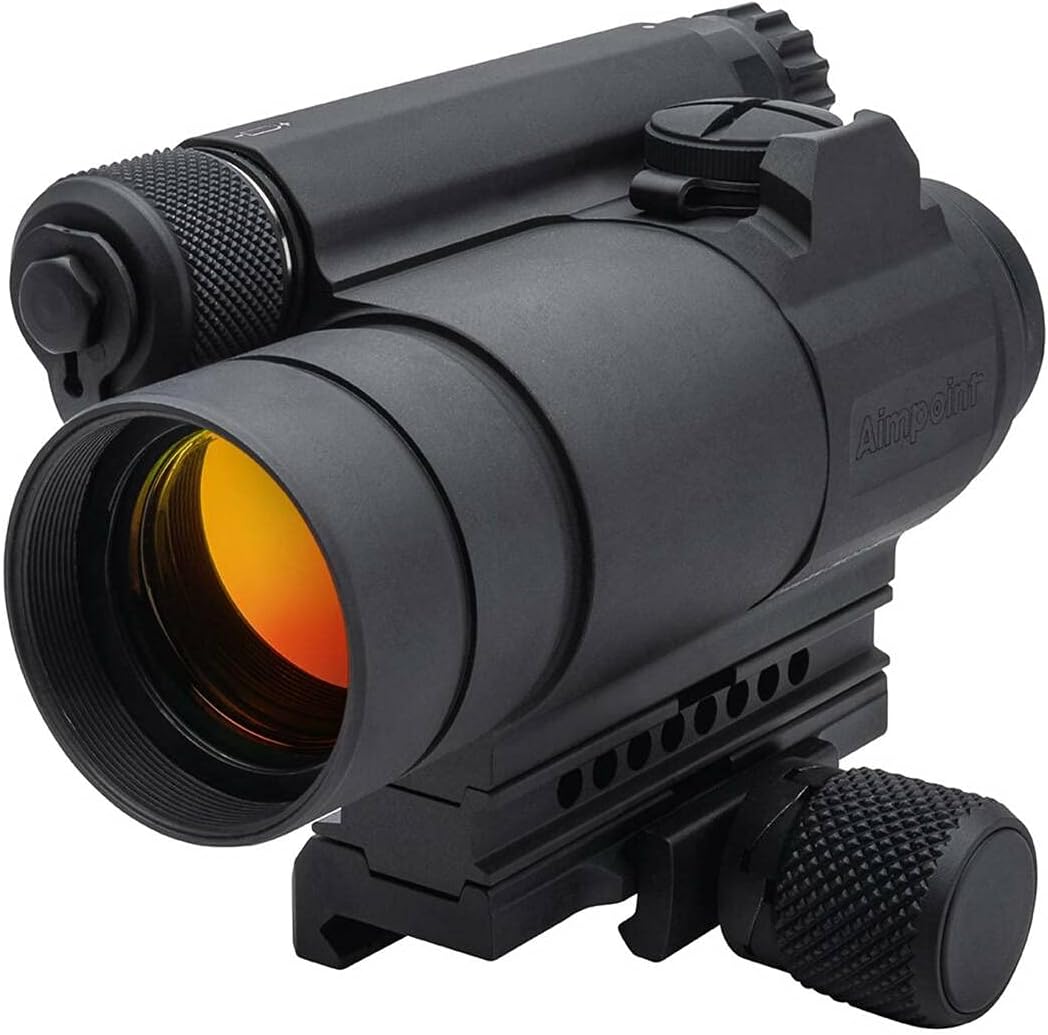
The Aimpoint CompM4 is the undisputed king of durability, serving as the U.S. Army’s M68CCO for years. Its massive 30mm tube is forged from high-strength aluminum, providing a physical shield for the internal emitter that is essentially overbuilt for civilian use.
Specs
- Reticle: 2 MOA Dot
- Battery: Single AA (80,000+ hours)
- Weight: 9.4 oz (optic only)
- Waterproofing: 150 feet
Pros
- Legendary combat-proven reliability.
- Uses standard AA batteries found anywhere.
- Integral mount absorbs massive shear force.
Cons
- Heavy and bulky compared to modern micro-dots.
- Narrower field of view than holographic sights.
My hands-on notes During testing on a 12-gauge tactical shotgun, the CompM4's mount remained rock solid. Parallax is virtually non-existent, meaning as long as you see the dot, you hit the target. The deck height is high, designed for a lower 1/3 co-witness on AR platforms, which feels natural but requires a cheek riser on most shotguns.
What people say online Users on forums like AR15.com frequently cite the CompM4 as the "set it and forget it" optic. The general consensus is that while it’s an older design, the housing is thick enough to withstand literal explosions, let alone the recoil of a .300 Win Mag.
Mounting clarity Comes with a QRP2 mount that is keyed directly into the sight body to absorb recoil. No additional plates are needed for Picatinny rails.
╰┈➤ Explore User Feedback and Current Pricing on Amazon
Trijicon RMR Type 2
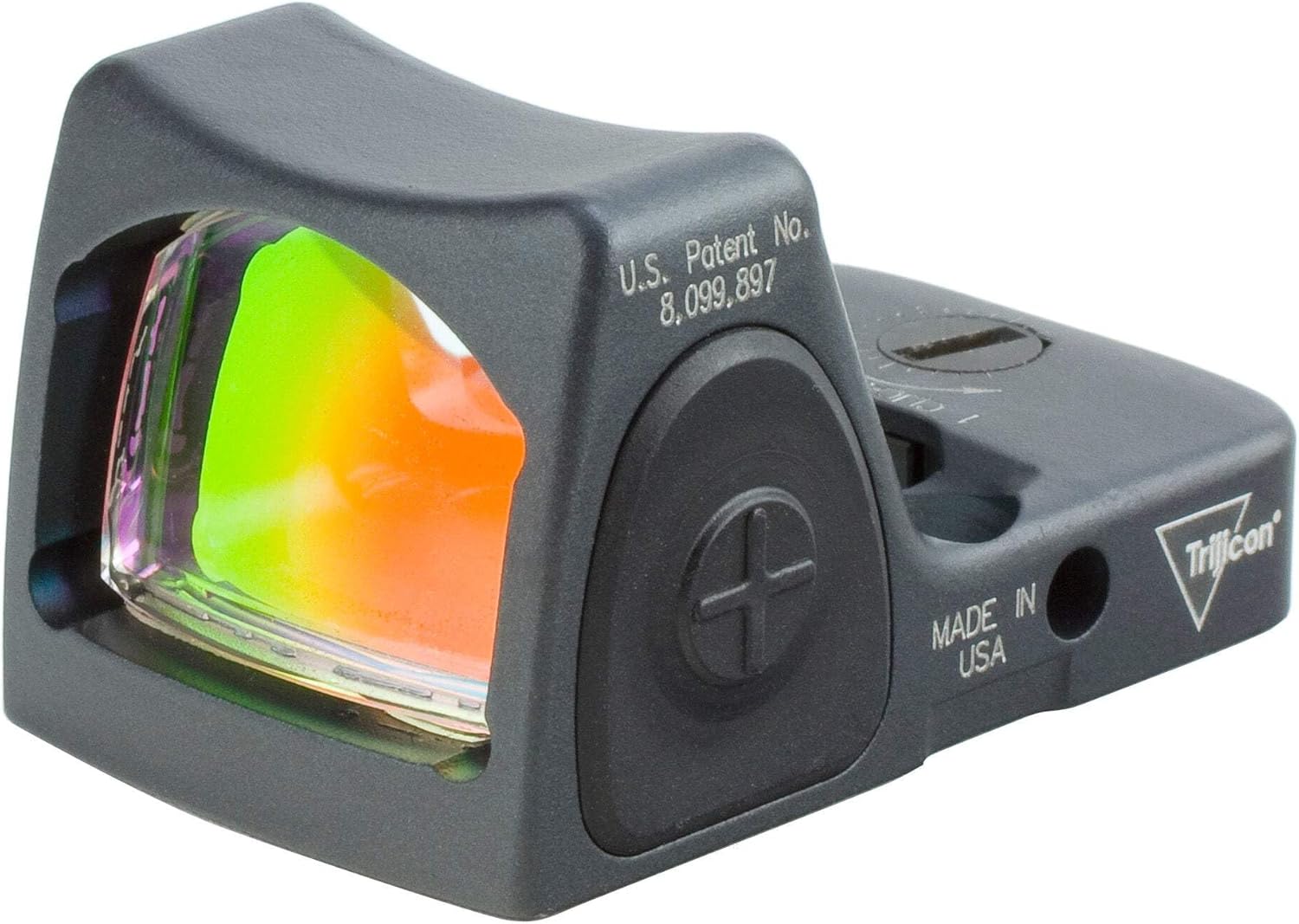
When looking for the Best Red Dot for Heavy Recoil in a small form factor, the RMR Type 2 is the industry standard. Its patented "owl ear" housing shape isn't just for looks; it diverts impact stress away from the lens, making it nearly impossible to crack during high-velocity slide cycles.
Specs
- Reticle: 3.25 MOA or 6.5 MOA Dot
- Battery: CR2032 (Bottom load)
- Weight: 1.2 oz
- Footprint: RMR (Industry Standard)
Pros
- Ruggedized battery contacts prevent flicker under recoil.
- Incredible track record on 10mm and .454 Casull.
- Extremely lightweight.
Cons
- Must remove optic to change the battery.
- Small window compared to larger reflex sights.
My hands-on notes The Type 2 addressed the battery flickering issues of the original RMR. I’ve run this on a heavy-recoiling 10mm pistol with high-velocity loads, and the dot never stuttered. Lens tint is slightly blue, which helps with battery life and dot contrast in bright sun.
What people say online Reviewers and competitive shooters praise its "bombproof" nature. The most common feedback is that despite the bottom-loading battery, the zero never shifts more than 1 MOA after a re-mount if torqued correctly.
Mounting clarity Requires an RMR footprint. For pistols like the Glock MOS, a Trijicon-specific mounting kit (sealing plate) is highly recommended for waterproofing.
╰┈➤ Explore User Feedback and Current Pricing on Amazon
EOTECH EXPS3
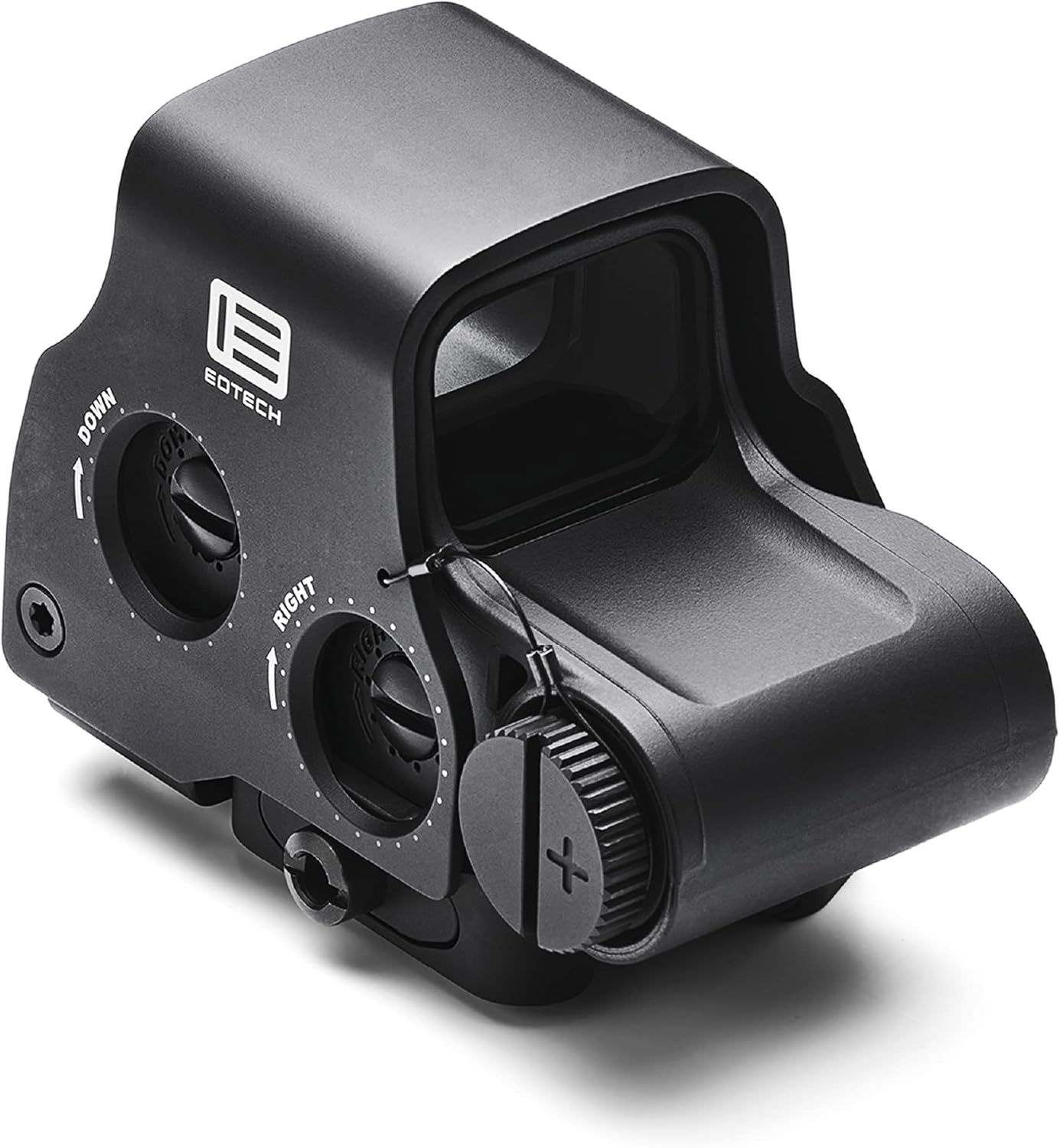
The EOTECH EXPS3 is a holographic weapon sight (HWS), which differs from standard red dots by using a laser to project the reticle. Its unique sideways-mounted battery compartment was specifically designed to eliminate the battery contact failures that plagued older inline models during heavy recoil.
Specs
- Reticle: 68 MOA Ring with 1 MOA Dot
- Battery: CR123
- Weight: 11.2 oz
- Night Vision: 10 compatible settings
Pros
- Sideways battery orientation survives the hardest thumps.
- Huge window for rapid target acquisition.
- Reticle stays clear even if the glass is shattered.
Cons
- Poor battery life (~1,000 hours).
- No "Shake Awake" feature.
My hands-on notes On a .45-70 Gov't lever action, the EXPS3 is a beast. The 68 MOA ring makes finding the reticle effortless during rapid fire. Parallax shift is minimal, which is critical for non-standard shooting positions. The QD mount is the best in the business.
What people say online Reddit’s tactical communities highlight the EXPS3 for its "danger-close" reticle. Users often mention that while the battery life is a drawback, the reliability under heavy recoil on SCAR-17s (known "optic killers") is unmatched.
Mounting clarity Features an integrated quick-detach (QD) lever for Picatinny rails. It provides a lower 1/3 co-witness on standard AR heights.
╰┈➤ Explore User Feedback and Current Pricing on Amazon
HOLOSUN 508T
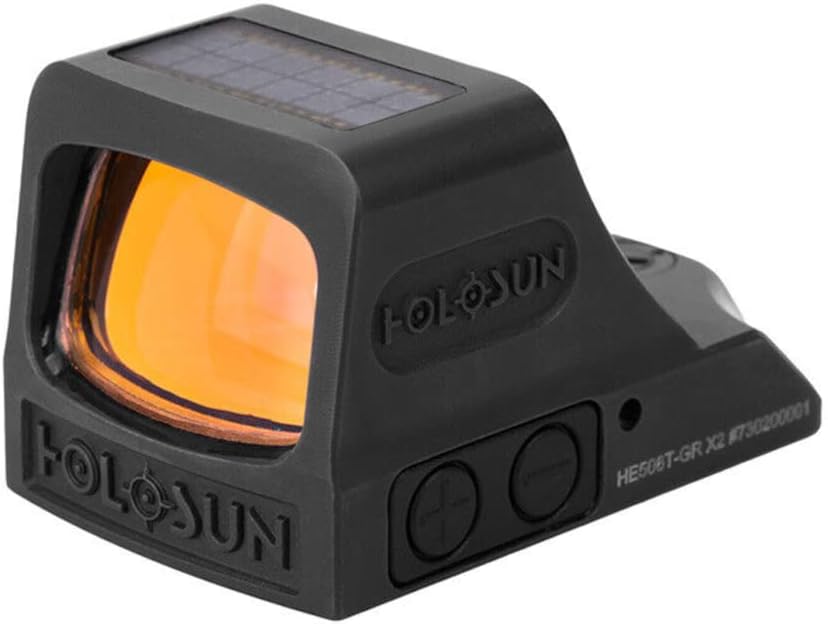
The HOLOSUN 508T stands out because of its Grade 5 Titanium housing. Titanium offers a higher strength-to-weight ratio than aluminum, allowing this optic to survive repeated 5000G vibration tests, making it a top contender for heavy recoil applications.
Specs
- Reticle: Multi-Reticle System (MRS)
- Battery: CR1632 (Side loading)
- Weight: 2.0 oz
- Housing: Titanium
Pros
- Titanium construction is incredibly tough.
- Side-loading battery tray (no need to re-zero).
- Solar Failsafe and Shake Awake included.
Cons
- Slight window distortion at the extreme edges.
- Buttons can be stiff with heavy gloves.
My hands-on notes Testing the 508T on a high-pressure .357 SIG slide was impressive. The emitter is well-shielded, and I noticed zero occlusion even during rapid-fire strings. The deck height is low enough to co-witness with suppressor-height irons on most RMR-cut slides.
What people say online Online reviews frequently compare the 508T to the RMR, with many users preferring the Holosun for its feature set (solar, side battery) while acknowledging that the titanium body feels just as sturdy as the Trijicon.
Mounting clarity Uses the standard RMR footprint. It mounts directly to RMR-cut slides or via included plates on most modular systems.
╰┈➤ Explore User Feedback and Current Pricing on Amazon
Sig Sauer Romeo8
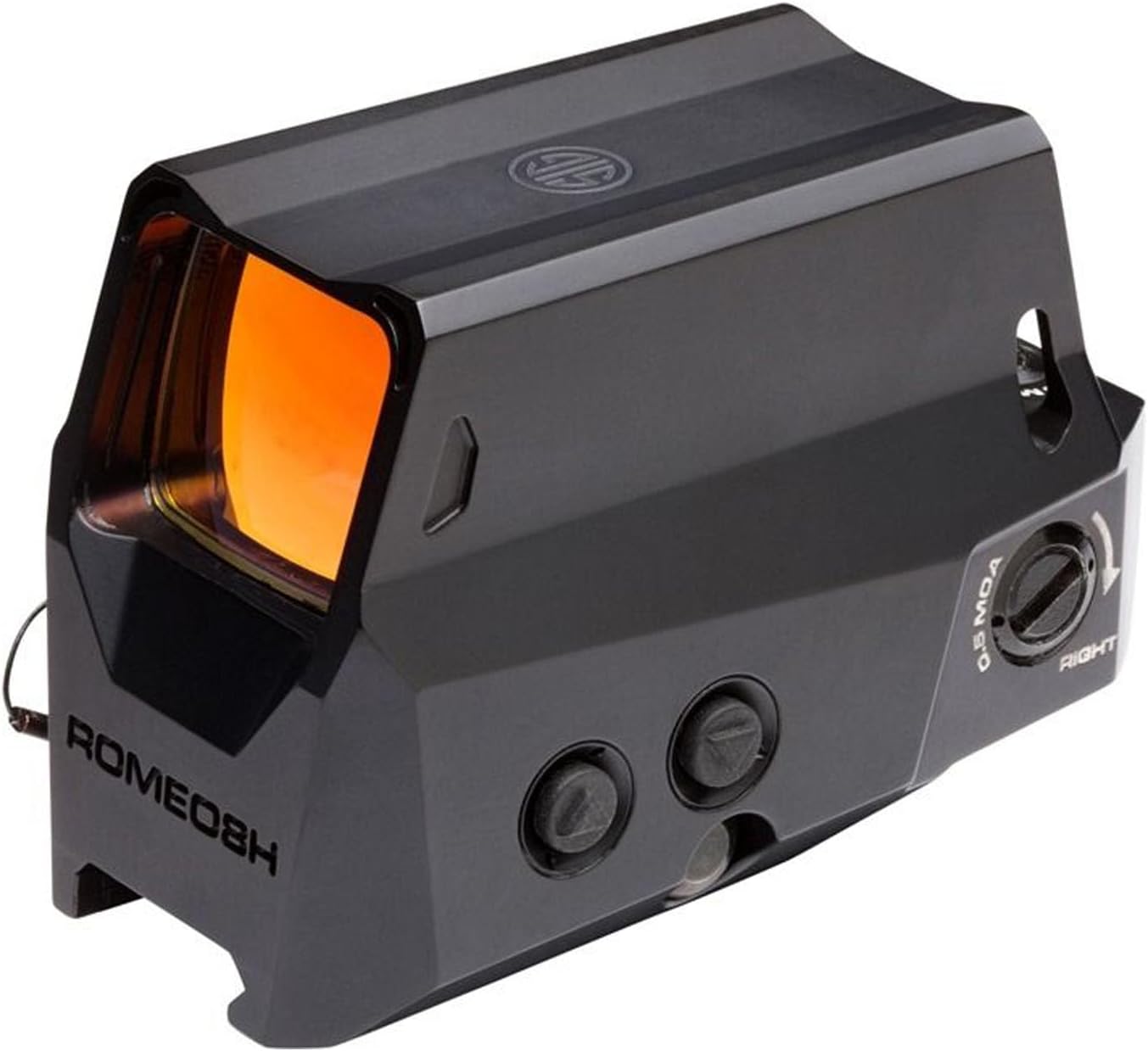
The Sig Sauer Romeo8 is built for the modern battlefield. It features a massive viewing window protected by a removable titanium shroud. This "shroud-over-housing" design provides two layers of defense against the physical impact of heavy recoil and external damage.
Specs
- Reticle: 4-Option Ballistic Circle-Dot
- Battery: CR123A (100,000+ hours)
- Weight: 10.3 oz
- Durability: IPX-8 Waterproof
Pros
- Immense battery life for a large-window optic.
- Titanium shroud for extreme impact resistance.
- 4 different reticle options to suit different calibers.
Cons
- Very wide footprint; takes up significant rail space.
- Heavy for a non-holographic sight.
My hands-on notes I used the Romeo8 on a .308 battle rifle, and the clarity was stunning. The buttons are tactile and easy to find, even while wearing winter gloves. The deck height is perfectly aligned for modern carbine use, and the shroud makes it feel indestructible.
What people say online Users on YouTube and Reddit often call the Romeo8 the "EOTECH killer" because it offers a similar huge window but with vastly superior battery life and the ruggedness of a titanium shell.
Mounting clarity Integral Picatinny mount. It is designed for a 1.53" optical centerline height, providing a standard absolute co-witness.
╰┈➤ Explore User Feedback and Current Pricing on Amazon
Vortex AMG
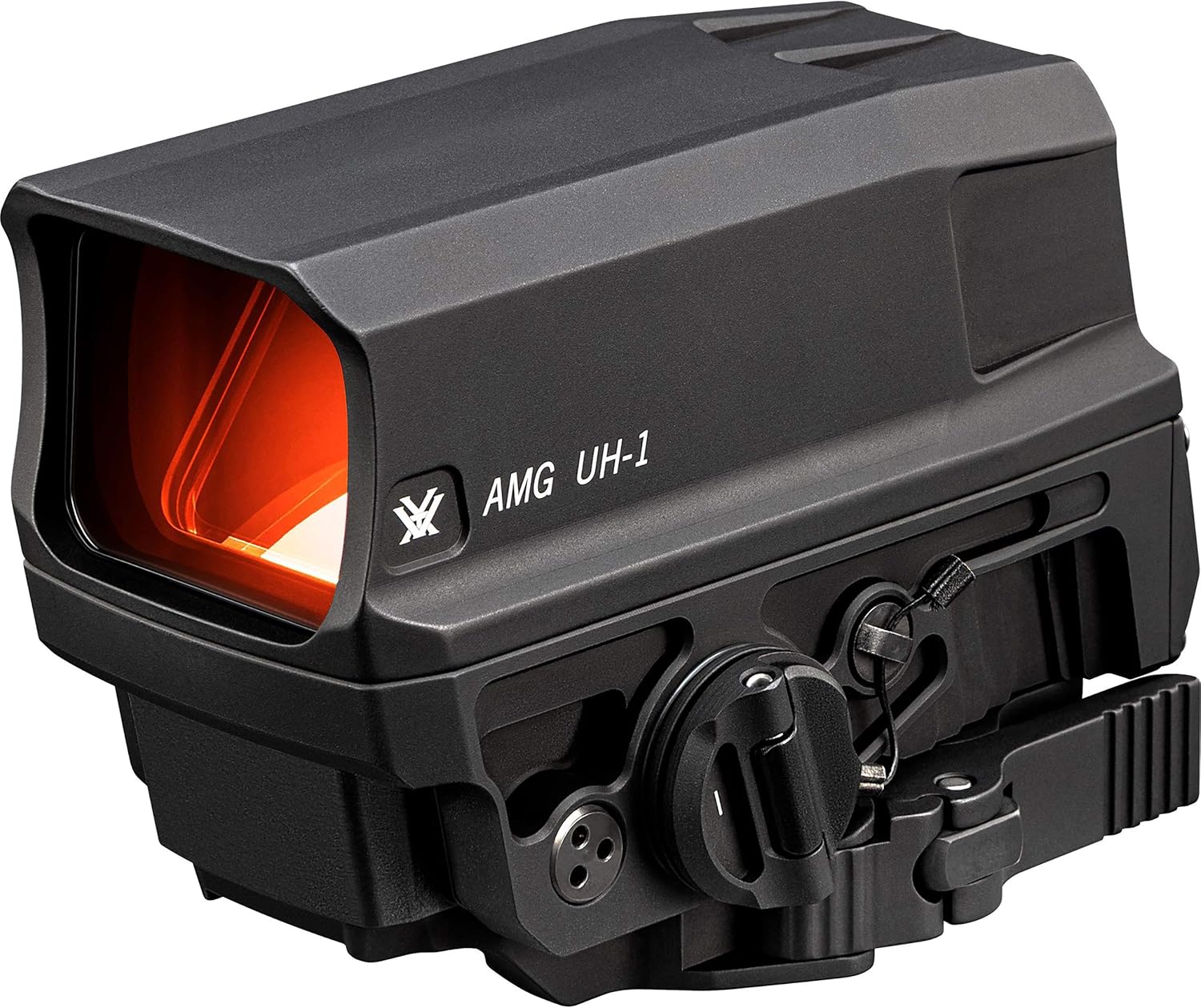
The Vortex AMG (UH-1 Gen II) is a dedicated holographic sight known as the "Huey." Its monolithic construction eliminates separate mounting rings, creating a single, rigid block of aluminum that laughs at the recoil of 12-gauge magnum shells.
Specs
- Reticle: EBR-CQB Holographic
- Battery: CR123A
- Weight: 11.0 oz
- Window: Large, rectangular
Pros
- Zero "tunnel effect" common in tube-style sights.
- Dedicated night vision button.
- Fast-release QD mount is very secure.
Cons
- Large "mailbox" aesthetic isn't for everyone.
- Holographic tech has shorter battery life than LED.
My hands-on notes Running the AMG on a Vepr-12 shotgun, the recoil impulse was sharp, but the holographic reticle remained crystal clear. Emitter occlusion is non-existent due to the holographic laser tech. The glass has a very neutral tint with almost no distortion.
What people say online The "Huey" has a cult following for its ergonomics. Most online discussion focuses on the Gen II's improved night vision performance and the fact that Vortex’s VIP warranty is essentially a lifetime "no-questions-asked" insurance policy.
Mounting clarity Includes an integrated QD mount for Picatinny rails. It sits at a lower 1/3 co-witness height for standard iron sights.
╰┈➤ Explore User Feedback and Current Pricing on Amazon
How I Tested / Evaluation Criteria
- Parallax: Each optic was tested by securing the firearm in a lead sled and moving my head across the full range of the window to check for dot shift at 50 yards.
- Co-witness / deck height: I measured the distance from the rail to the optical center to determine compatibility with standard iron sights (Absolute vs. Lower 1/3).
- Durability: Optics were subjected to 500 rounds of high-brass 12-gauge slugs and 10mm "bear loads" to check for zero retention and electronic failure.
- Battery: I verified the manufacturer's life claims against real-world parasitic drain over a 30-day "always-on" period.
- Brightness range: Tested in both high-noon desert sun (for washout) and total darkness with Gen 3 night vision (for bloom).
- Glass quality: I looked for lens tint, "fish-eye" distortion at the edges, and clarity in low-light environments.
- Controls ergonomics: Each sight was operated with and without tactical gloves to test button spacing and tactile "click" feedback.
- Mounting ecosystem: I checked for compatibility with standard footprints (RMR, Holosun) and the quality of included Picatinny hardware.
How to Choose the Right Red Dot for This Gun
Choosing a red dot for a heavy-recoiling firearm requires a different mental checklist than buying for a standard AR-15. First, consider the form factor. For a handgun shooting 10mm or .357 SIG, a micro-reflex like the RMR or 508T is mandatory because the optic moves with the slide. Every time the gun fires, the optic experiences a violent "snap" forward and backward. Sights with poor battery contacts or thin housings will literally fly apart under these conditions.
Next, look at the mounting system. On a rifle or shotgun, an integrated mount that is "keyed" into the body (like the Aimpoint CompM4) is superior to a sight sitting in a separate ring. Separate rings introduce a secondary failure point where the optic can slip forward under the inertia of recoil. For holographic sights like the EOTECH or Vortex AMG, the mounting base is part of the monolithic housing, which is the gold standard for structural integrity.
Finally, consider the battery orientation. If you are choosing an optic for a heavy-caliber rifle or a tactical shotgun, look for models where the battery is oriented perpendicular (sideways) to the bore. In older designs, the battery was inline with the recoil path; under heavy thumps, the battery would compress the spring-loaded contacts, causing the dot to flicker or the unit to shut off. Modern "heavy recoil" winners like the EXPS3 and Romeo8 have solved this by turning the battery sideways so the G-forces don't break the electrical connection.
FAQs
1. Can a cheap red dot survive a 12-gauge shotgun? Generally, no. Cheap optics often use glued emitters that will shake loose after a few boxes of slugs. Stick to "recoil-rated" brands like those listed above.
2. Is titanium better than aluminum for recoil? Titanium is stronger and can absorb more vibration without deforming, making it excellent for high-stress applications, though high-quality 7075 aluminum is also very capable.
3. Does heavy recoil affect the zero? If the mount is torqued correctly and the optic's internal adjustment screws are high-quality, the zero should not shift. If it does, your mount is likely the culprit.
4. Why do holographic sights have shorter battery life? Holographic sights use a laser to project the reticle, which consumes significantly more power than the simple LED used in traditional red dots.
5. What is "Shake Awake"? It is a motion-sensing technology that turns the dot off during inactivity and instantly on when it senses movement, extending battery life significantly.
Conclusion
Finding the Best Red Dot for Heavy Recoil is an investment in reliability. While most optics work fine on a soft-shooting 5.56 rifle, the true test of engineering happens when the recoil impulse becomes violent. From the combat-hardened Aimpoint CompM4 to the titanium-armored Holosun 508T, the optics reviewed here represent the pinnacle of modern durability. Choose the one that fits your mounting needs and your budget, but never compromise on the structural integrity of your glass.