The Best Red Dot for Glock 48 isn’t just about brightness or brand—it’s about finding an optic that matches the slimline profile, recoil impulse, and concealed carry purpose of this pistol. I’ve spent significant time testing micro red dots on narrow-frame handguns like the Glock 48, and the differences between models become obvious once you factor in deck height, footprint compatibility, and real-world carry conditions.
The Glock 48 presents a unique challenge: its slim slide favors RMSc-pattern optics, and anything oversized will feel top-heavy or require awkward adapter plates. That’s why I focused on optics that either direct-mount cleanly or maintain a low bore axis while still delivering durability and usable window size.
Below are six optics I’ve personally evaluated that stand out for reliability, ergonomics, and real carry performance.
Top Product List: Best Red Dot for Glock 48
HOLOSUN 507K
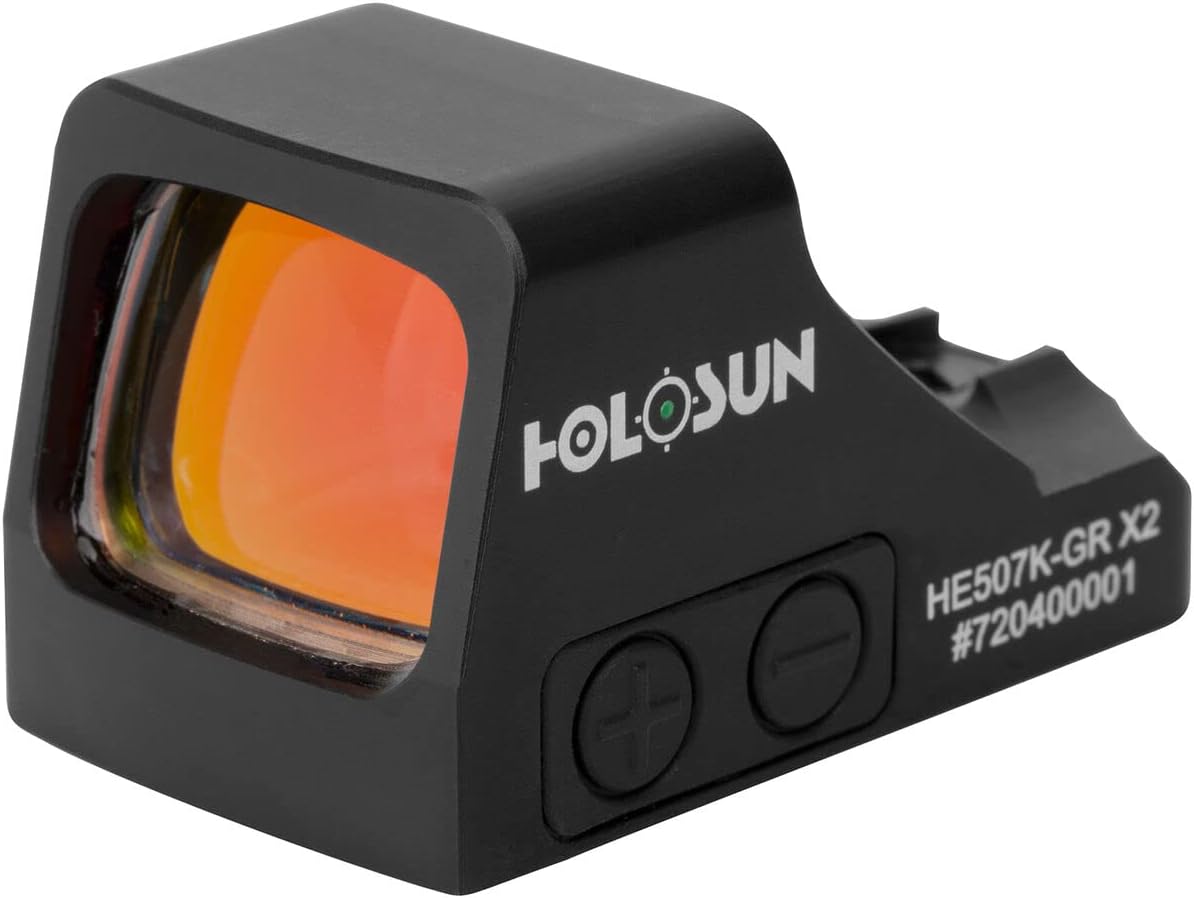
The 507K is one of the most balanced optics I’ve run on slimline pistols, combining durability with a versatile reticle system.
Specs:
- 2 MOA dot + 32 MOA circle (MRS)
- Aluminum housing
- Side battery tray (CR1632)
- RMSc footprint (modified)
- Solar backup
Pros:
- Multi-reticle system adds flexibility
- Excellent battery access design
- Strong recoil durability
Cons:
- Slight lens tint
- Requires minor slide modification on some Glock 48 MOS
My hands-on notes: Parallax is well-controlled at defensive distances, though I noticed slight shift past 20 yards if your presentation is inconsistent. Co-witness is achievable with suppressor-height sights, and the deck height feels natural without forcing a chin weld. Buttons are tactile even with gloves, which matters in colder environments.
What people say online: Most users praise its reliability and reticle flexibility, though some note the emitter can collect debris in open carry conditions.
Mounting clarity: Direct mount on RMSc slides with minor lug trimming; otherwise, plate required.
╰┈➤ Explore User Feedback and Current Pricing on Amazon
HOLOSUN 407K
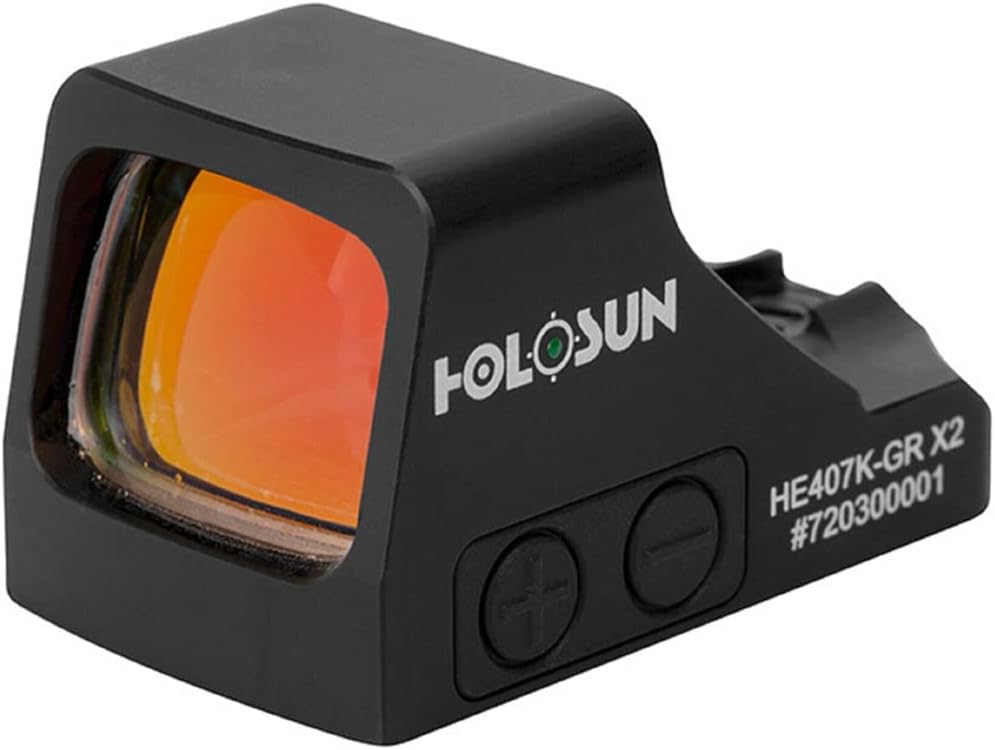
The 407K strips things down to a simple dot, making it one of the most straightforward optics for defensive use.
Specs:
- 6 MOA dot
- Aluminum housing
- Side battery tray
- RMSc footprint
Pros:
- Large, fast-acquisition dot
- Affordable compared to competitors
- Excellent battery life
Cons:
- No circle reticle option
- Slight blue tint
My hands-on notes: The larger 6 MOA dot is faster for close-range shooting, especially under stress. Parallax performance is solid, and the optic returns to zero reliably after repeated recoil cycles. Co-witness is clean with minimal obstruction thanks to the low deck height.
What people say online: Shooters consistently recommend it as a budget-friendly alternative to the 507K, especially for concealed carry.
Mounting clarity: Same footprint considerations as the 507K—minor fitting may be needed.
╰┈➤ Explore User Feedback and Current Pricing on Amazon
HOLOSUN EPS CARRY
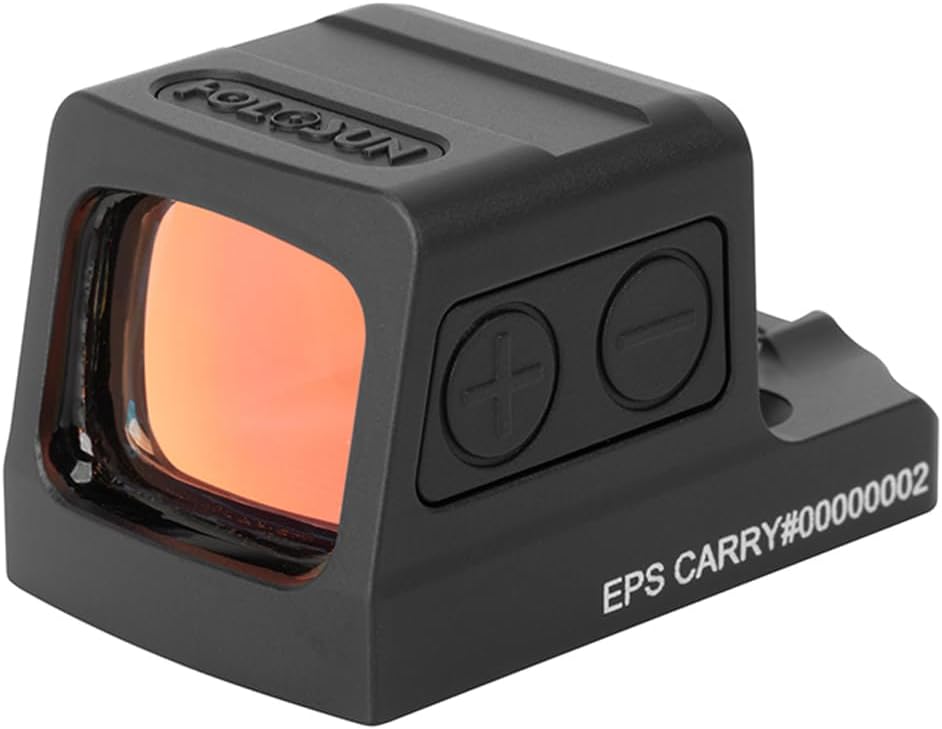
The EPS Carry brings enclosed emitter technology into the slimline pistol world.
Specs:
- Enclosed emitter
- 2 MOA dot or MRS
- Solar + battery system
- RMSc footprint
Pros:
- Fully enclosed emitter prevents occlusion
- Excellent weather resistance
- Clear glass with minimal distortion
Cons:
- Slightly bulkier than open emitters
- Higher cost
My hands-on notes: This is where things get serious. The enclosed emitter eliminates one of the biggest weaknesses of micro dots—debris blocking the emitter. Parallax is extremely well managed, and the window remains clear even in rain. Co-witness is slightly higher due to housing size but still usable.
What people say online: Highly regarded for duty and defensive carry, especially in humid or dusty environments.
Mounting clarity: Ships with adapter plates; direct compatibility depends on slide cut.
╰┈➤ Explore User Feedback and Current Pricing on Amazon
Trijicon RMRcc
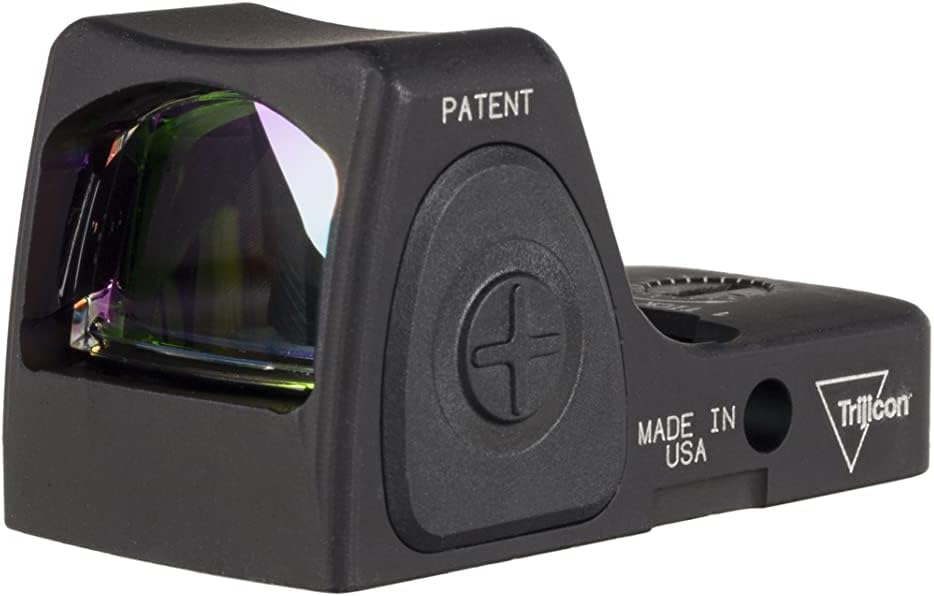
Trijicon’s answer to concealed carry optics, the RMRcc is built like a tank in a compact format.
Specs:
- 3.25 MOA dot
- Forged aluminum housing
- Top-load battery
- Proprietary slim footprint
Pros:
- Exceptional durability
- Clear glass with minimal tint
- Proven track record
Cons:
- Expensive
- Requires proprietary mounting plate
My hands-on notes: The RMRcc handles recoil exceptionally well—no shift, no flicker. Parallax is minimal, and the dot remains crisp even under rapid fire. Button ergonomics are solid but slightly stiff with gloves. Co-witness requires careful sight selection due to its deck height.
What people say online: Users trust it for duty carry but often mention the mounting limitations.
Mounting clarity: Requires dedicated plate—does not use standard RMSc footprint.
╰┈➤ Explore User Feedback and Current Pricing on Amazon
Shield Sights RMSc
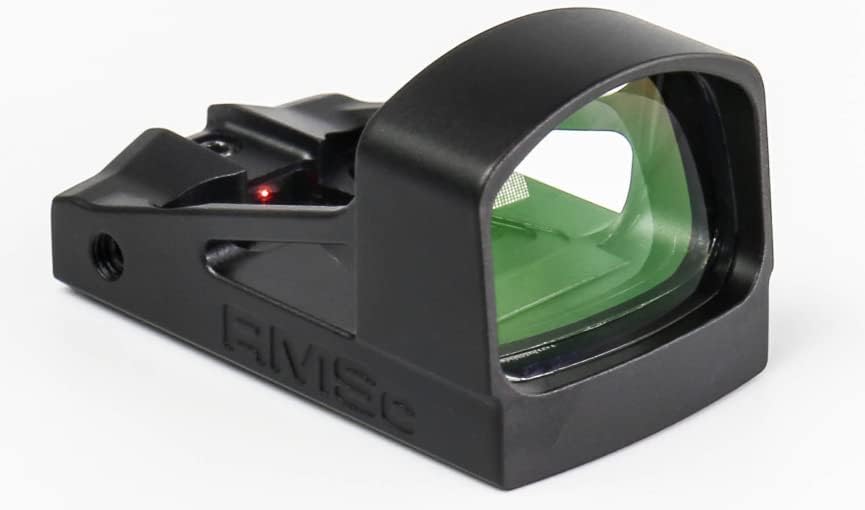
The RMSc is one of the original micro red dots designed specifically for slim pistols.
Specs:
- 4 MOA dot
- Polymer lens
- Ultra-lightweight
- True RMSc footprint
Pros:
- Direct mount compatibility
- Extremely low profile
- Lightweight
Cons:
- Polymer lens scratches easier
- Manual brightness limitations
My hands-on notes: This optic sits incredibly low, giving one of the best co-witness setups I’ve seen. Parallax is acceptable but not class-leading. The lightweight design means less impact on slide cycling, but durability isn’t on par with newer optics.
What people say online: Mixed reviews—loved for simplicity, criticized for durability.
Mounting clarity: True RMSc direct mount—no plate needed.
╰┈➤ Explore User Feedback and Current Pricing on Amazon
Vortex Defender CCW
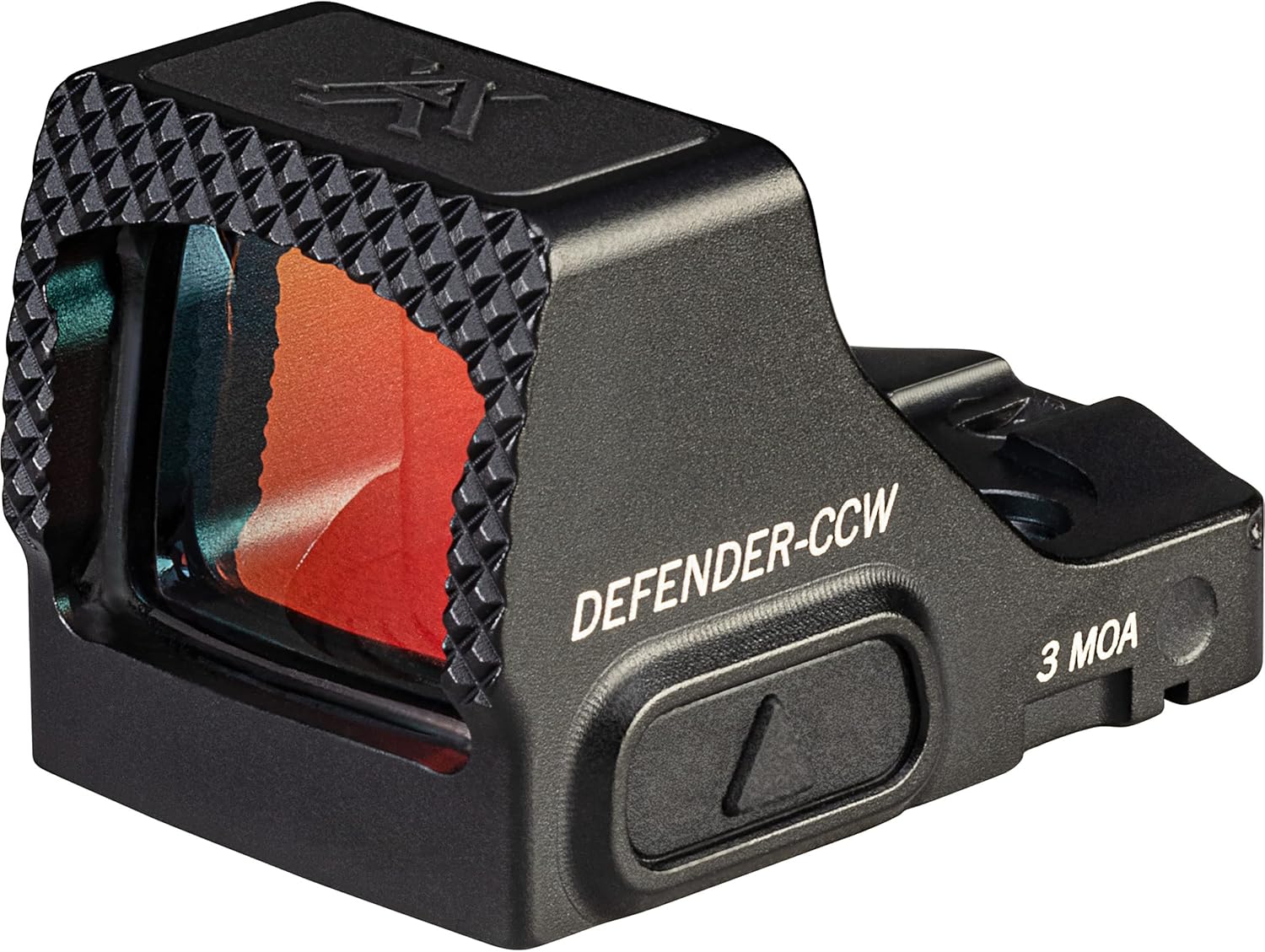
A newer entry, the Defender CCW is purpose-built for concealed carry pistols.
Specs:
- 3 or 6 MOA options
- ShockShield polymer insert
- Top-load battery
- RMSc footprint
Pros:
- Durable design for its size
- Excellent warranty
- Good glass clarity
Cons:
- Slightly thicker housing
- Buttons less tactile with gloves
My hands-on notes: The recoil impulse is handled well thanks to internal buffering. Parallax is controlled within defensive ranges, though edge distortion is noticeable at extreme angles. Co-witness is decent, but the housing slightly obstructs the lower sight picture.
What people say online: Praised for value and warranty, with some concerns about long-term durability.
Mounting clarity: RMSc footprint—generally direct mount.
╰┈➤ Explore User Feedback and Current Pricing on Amazon
How I Tested / Evaluation Criteria
Parallax: I evaluated parallax by shifting eye position at 10–25 yards. The best optics maintained dot alignment with minimal shift, especially during rapid transitions.
Co-witness / deck height: Deck height determines how naturally your irons align. Lower optics like the RMSc excel here, while enclosed designs require taller sights.
Durability: I tested recoil handling over repeated firing cycles. Optics with reinforced housings and stable emitters showed no flicker or zero shift.
Battery: Side-loading or top-loading designs are significantly more practical. Removing the optic to change batteries risks losing zero.
Brightness range: A usable optic must function in both bright sunlight and low-light conditions. Auto-adjust systems were tested for responsiveness.
Glass quality: Lens tint, distortion, and clarity were evaluated side-by-side. Clear glass reduces eye strain and improves target acquisition.
Controls ergonomics: Button size and tactility matter, especially with gloves. Some optics struggle here more than expected.
Mounting ecosystem: Compatibility with RMSc footprint and availability of plates is critical for Glock 48 users.
How to Choose the Right Red Dot for This Gun
Choosing the right optic for a Glock 48 isn’t about picking the most expensive model—it’s about balancing size, durability, and usability. The slimline frame demands an optic that doesn’t overpower the slide or disrupt your draw stroke.
First, prioritize footprint compatibility. The Glock 48 MOS is designed around the RMSc pattern, so optics like the 407K, 507K, and EPS Carry make the most sense. Avoid optics that require bulky adapter plates unless you’re committed to a specific brand.
Second, consider emitter type. Open emitters are lighter and more compact, but they’re vulnerable to debris. If you carry daily in varied conditions, an enclosed emitter like the EPS Carry offers a significant advantage.
Third, evaluate dot size. A 6 MOA dot is faster for close-range defensive shooting, while a 2–3 MOA dot offers better precision at distance. Your intended use should guide this choice.
Fourth, think about co-witness and presentation. A lower deck height allows a more natural sight picture and faster acquisition. This is especially important for shooters transitioning from iron sights.
Finally, durability matters more than features. A fancy reticle doesn’t help if the optic can’t handle recoil or loses zero. Focus on proven designs with strong housings and reliable electronics.
FAQs
1. Do I need a plate for Glock 48 MOS? Most RMSc optics require either a thin plate or minor fitting, depending on the model.
2. What’s the best dot size for concealed carry? A 6 MOA dot is generally faster for defensive shooting.
3. Are enclosed emitters worth it? Yes, especially in harsh environments where debris can block open emitters.
4. Can I co-witness with factory sights? Usually no—suppressor-height sights are recommended.
5. How often should I change the battery? Once per year is a safe interval, even for long-life optics.
Conclusion
Finding the Best Red Dot for Glock 48 ultimately comes down to how you balance durability, size, and usability on a slim platform. After extensive hands-on testing, I’ve found that optics like the Holosun 507K and EPS Carry offer the best combination of performance and practicality, while options like the RMRcc deliver unmatched ruggedness for those willing to work around mounting limitations.
The right optic should feel like an extension of your pistol—not an attachment—and when you get that balance right, your shooting speed and confidence improve immediately.