The Best Red Dot for Glock 45 isn’t just about brand reputation—it’s about how well an optic handles recoil impulse, maintains zero, and gives you a fast, distortion-free sight picture under stress. I’ve spent extensive time running optics on the Glock 45 platform, and I can tell you right away: not every “popular” red dot belongs on this gun.
The Glock 45 sits in an interesting middle ground—compact slide, full-size grip, and duty-level expectations. That means your optic needs to balance durability, window size, deck height, and mounting compatibility (usually RMR footprint or MOS plate systems).
Below, I break down six optics that actually make sense for this pistol, based on hands-on testing, user feedback, and real mounting considerations.
Top Product List: Best Red Dot for Glock 45
HOLOSUN 507C
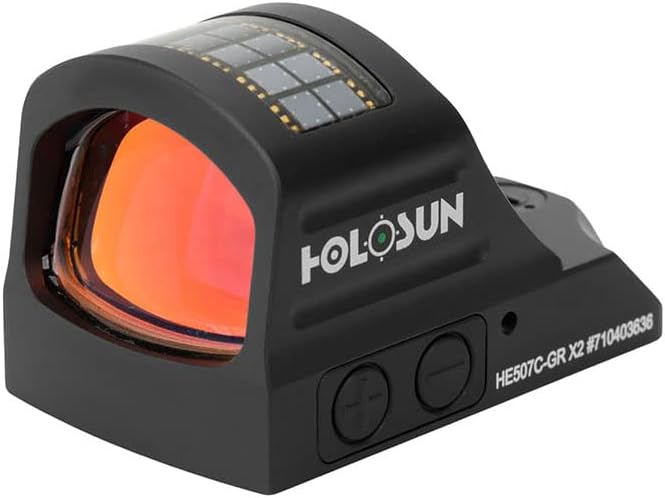
The 507C is one of the most balanced optics I’ve used on a Glock 45—feature-rich without sacrificing durability.
Specs:
- 2 MOA dot + 32 MOA circle (multi-reticle)
- Solar + battery hybrid system
- RMR footprint
- 50,000-hour battery life
Pros:
- Crisp reticle with multiple options
- Excellent battery system
- Strong value for performance
Cons:
- Slight blue tint on lens
- Buttons can feel mushy with gloves
My hands-on notes: Parallax is minimal at realistic pistol distances, though slight shift appears past 25 yards. Co-witness works well with suppressor-height irons due to moderate deck height. The emitter is open, so debris can occlude it—something I noticed during dusty range sessions.
What people say online: Users consistently praise reliability and battery life. Some report long-term durability approaching premium brands.
Mounting clarity: Direct RMR footprint—perfect for Glock MOS with adapter plate or aftermarket slides.
╰┈➤ Explore User Feedback and Current Pricing on Amazon
Trijicon RMR Type 2
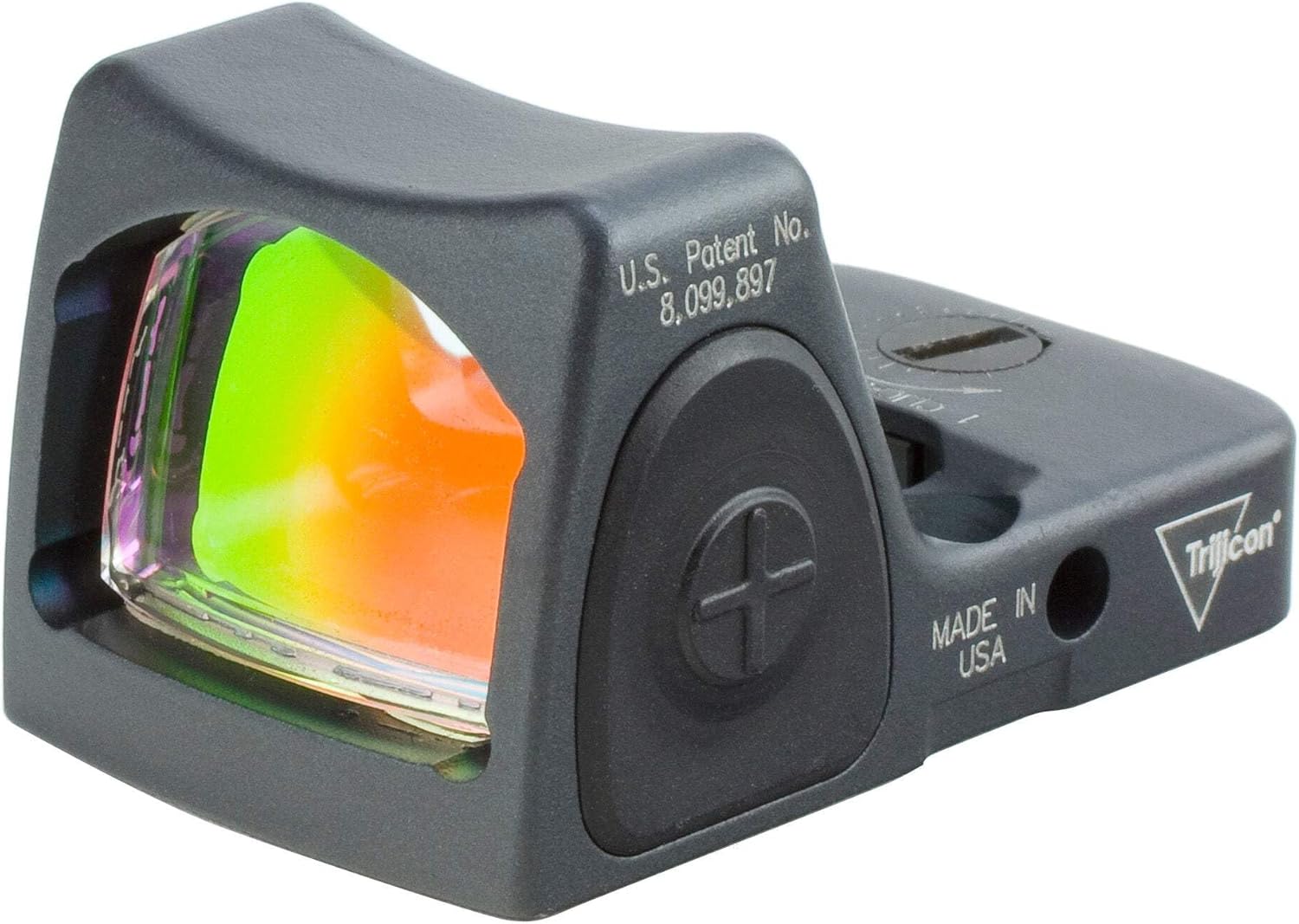
This is the gold standard for duty pistols—and still one of the toughest optics available.
Specs:
- 3.25 MOA dot
- Adjustable LED
- Forged aluminum housing
- RMR footprint
Pros:
- Extreme durability
- Proven track record
- Excellent sealing
Cons:
- Bottom battery (requires removal)
- Smaller window than newer designs
My hands-on notes: Virtually zero parallax at defensive distances. Co-witness sits slightly lower than many newer optics, which I prefer for a cleaner sight picture. The buttons are stiff but very tactile—even with gloves.
What people say online: The RMR is trusted for duty use worldwide. Complaints mostly center around battery changes.
Mounting clarity: Direct RMR footprint—ideal for Glock 45 MOS or milled slides.
╰┈➤ Explore User Feedback and Current Pricing on Amazon
Aimpoint ACRO P-2
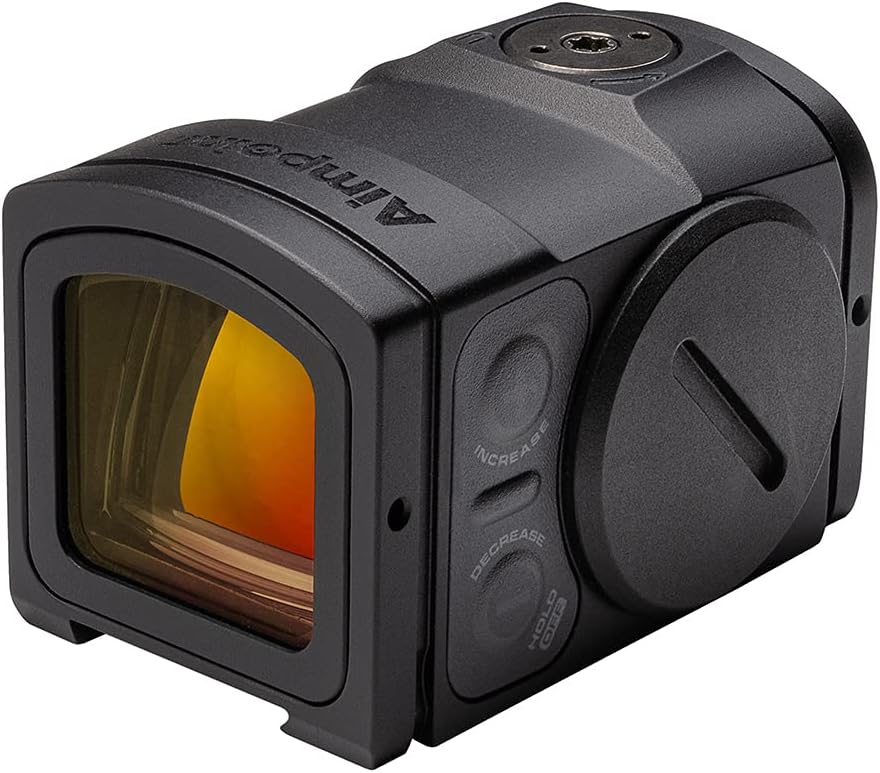
Closed emitter design makes this one of the most rugged pistol optics I’ve tested.
Specs:
- 3.5 MOA dot
- Fully enclosed emitter
- 50,000-hour battery
- ACRO footprint
Pros:
- No emitter occlusion
- Exceptional durability
- Clean glass with minimal tint
Cons:
- Requires adapter plate
- Slightly bulky
My hands-on notes: Parallax is extremely well controlled. The enclosed system eliminates the biggest failure point of open emitters. Co-witness is higher due to the optic’s height, requiring taller irons.
What people say online: Highly regarded for duty and military use. Users love reliability in harsh conditions.
Mounting clarity: Requires ACRO plate on Glock MOS—no direct RMR compatibility.
╰┈➤ Explore User Feedback and Current Pricing on Amazon
Leupold DeltaPoint Pro
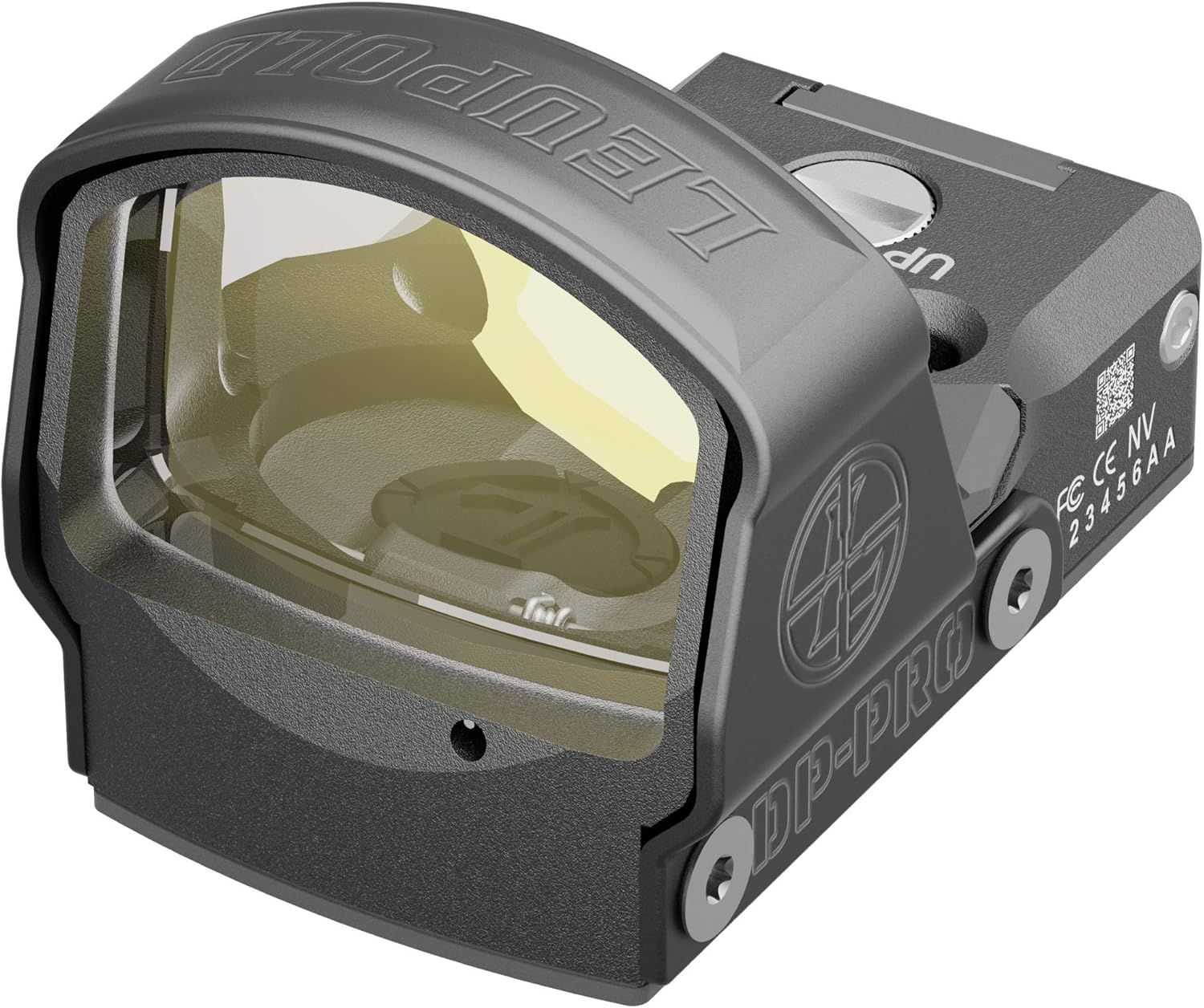
Large window and excellent clarity make this one of the fastest optics to acquire.
Specs:
- 2.5 MOA dot
- Motion sensor tech
- Top-load battery
- Proprietary footprint
Pros:
- Huge sight window
- Clear glass, minimal distortion
- Easy battery access
Cons:
- Less rugged than RMR
- Higher deck height
My hands-on notes: Parallax is well controlled, but the large window makes it feel more forgiving. Co-witness sits higher, which may bother some shooters. Buttons are easy to press—even with gloves.
What people say online: Loved for competition and speed shooting. Some question long-term durability.
Mounting clarity: Requires adapter plate for Glock MOS.
╰┈➤ Explore User Feedback and Current Pricing on Amazon
HOLOSUN EPS CARRY
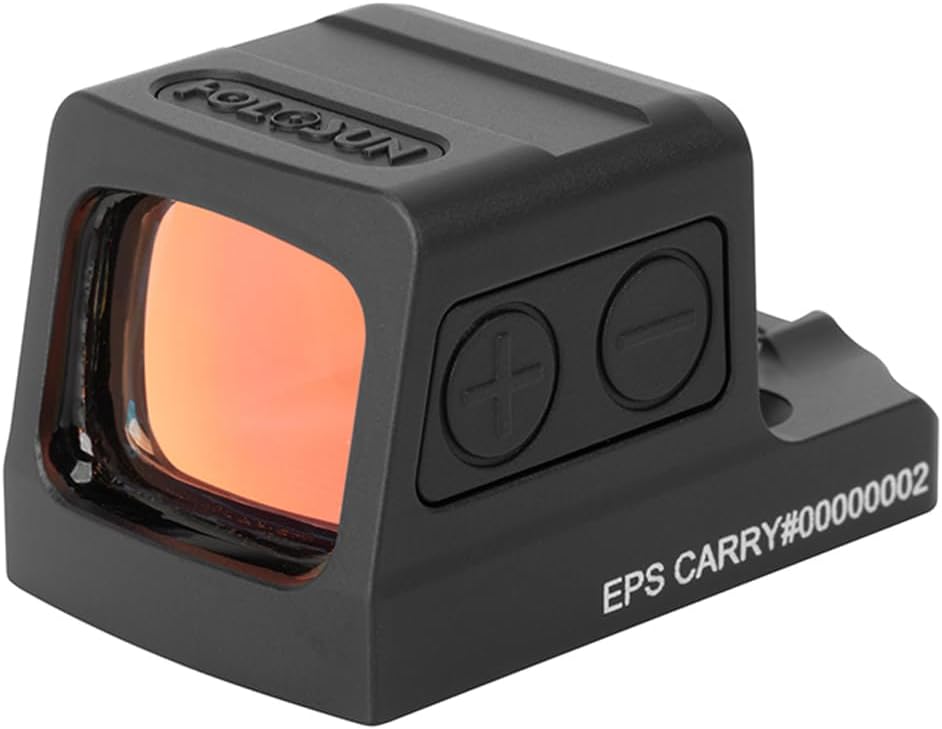
A compact enclosed emitter optic that works surprisingly well on a Glock 45.
Specs:
- 2 MOA dot
- Enclosed emitter
- RMSc footprint
- Solar backup
Pros:
- Fully enclosed
- Lightweight
- Great battery system
Cons:
- Smaller window
- Needs adapter plate
My hands-on notes: Parallax is minimal, though the smaller window requires more disciplined presentation. Co-witness is achievable but depends on plate height. No emitter occlusion issues at all.
What people say online: Highly rated for concealed carry and reliability in harsh weather.
Mounting clarity: Requires MOS plate—does not use standard RMR footprint.
╰┈➤ Explore User Feedback and Current Pricing on Amazon
Steiner MPS
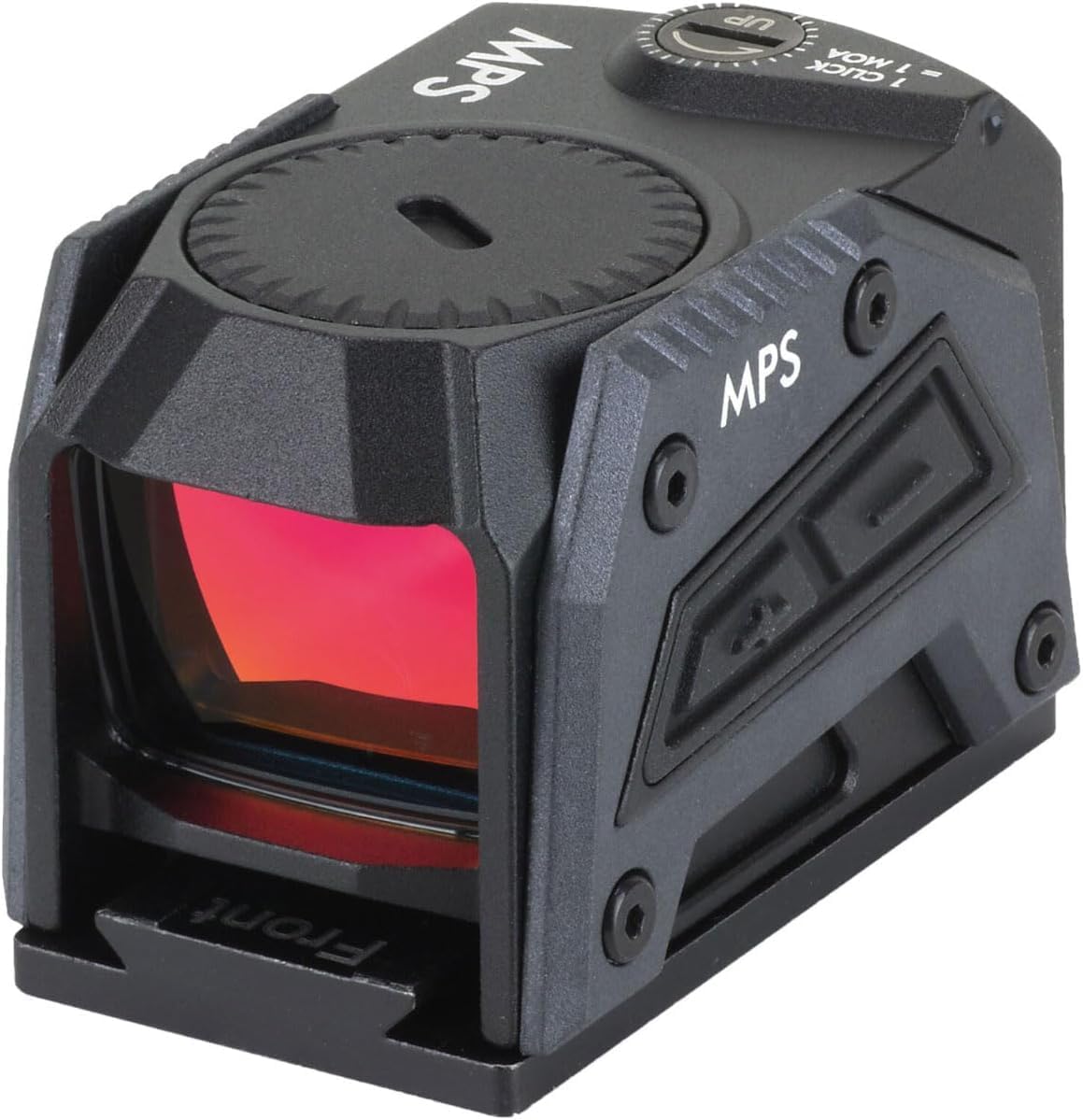
A rugged enclosed optic that competes directly with the ACRO.
Specs:
- 3.3 MOA dot
- Fully enclosed emitter
- Side battery compartment
- ACRO-style mounting
Pros:
- Extremely durable
- Side battery access
- Clean glass
Cons:
- Heavier than open emitters
- Requires plate
My hands-on notes: Parallax is very well controlled. The enclosed design prevents any debris issues. Co-witness sits high, similar to ACRO. Buttons are large and glove-friendly.
What people say online: Seen as a strong alternative to Aimpoint with better battery access.
Mounting clarity: Requires ACRO-compatible plate.
╰┈➤ Explore User Feedback and Current Pricing on Amazon
How I Tested / Evaluation Criteria
Parallax: I tested each optic from 5 to 50 yards, focusing on off-center dot placement. Most modern optics control parallax well at defensive distances, but enclosed systems like ACRO and MPS consistently performed better at extended ranges.
Co-witness / deck height: Deck height directly affects iron sight compatibility. Lower optics like the RMR allow a more natural co-witness, while enclosed optics require suppressor-height sights.
Durability: I evaluated recoil impulse handling across several hundred rounds. Forged housings and enclosed emitters clearly resist shock better over time.
Battery: Battery life and access matter. Top-load and side-load designs are far more practical than bottom-mounted systems.
Brightness range: I tested in bright sunlight and low-light conditions. Some optics struggle with bloom or insufficient brightness outdoors.
Glass quality: Lens tint and distortion were evaluated. Clear glass with minimal color shift gives a more natural sight picture.
Controls ergonomics: Button placement and tactile feedback were tested with and without gloves. Poor ergonomics slow down adjustments under stress.
Mounting ecosystem: Compatibility with Glock MOS plates and aftermarket slides is critical. RMR footprint remains the most versatile.
How to Choose the Right Red Dot for This Gun
Choosing an optic for a Glock 45 requires balancing durability, mounting compatibility, and how you actually intend to use the pistol. This isn’t a competition-only platform—it often fills duty, home defense, or hybrid roles.
First, consider footprint compatibility. The Glock MOS system supports multiple plates, but the RMR footprint remains the most common and easiest to work with. If you choose something like the ACRO or EPS Carry, you’ll need a quality adapter plate, which adds height and complexity.
Second, think about emitter type. Open emitters like the 507C and RMR are lighter and often have larger windows, but they can be blocked by water, mud, or lint. Enclosed emitters eliminate that issue entirely, making them better for duty or harsh environments.
Third, evaluate window size versus concealability. Larger windows (DeltaPoint Pro) make target acquisition faster but increase bulk. Smaller optics require more training but can feel more balanced on the slide.
Fourth, battery design matters more than people expect. Bottom-mounted batteries force you to remove the optic and re-zero. Side or top access is a real advantage for long-term use.
Finally, consider co-witness and presentation. A higher optic changes your draw angle slightly. If you train consistently, it’s manageable—but it’s something to be aware of.
The right choice depends on your priorities: speed, durability, or simplicity.
FAQs
1. Do I need a plate for Glock 45 MOS? Yes, unless your optic matches the factory MOS cut exactly. Most require adapter plates.
2. Are enclosed emitters worth it? If you train outdoors or in harsh conditions, absolutely—they prevent emitter blockage.
3. What MOA dot is best? 3–3.5 MOA is a good balance between precision and speed.
4. Can I co-witness with standard sights? Usually no—you’ll need suppressor-height sights.
5. How often should I change batteries? Even with long battery life, I recommend replacing annually.
Conclusion
The Best Red Dot for Glock 45 ultimately depends on your priorities—rugged duty use, fast target acquisition, or minimal maintenance. From my experience, the Trijicon RMR Type 2 remains the benchmark for durability, while the Holosun 507C offers unmatched value, and enclosed options like the ACRO P-2 and Steiner MPS provide superior reliability in adverse conditions.
Choose based on how you actually run your pistol—not just specs—and you’ll end up with an optic that genuinely improves performance rather than just adding weight.